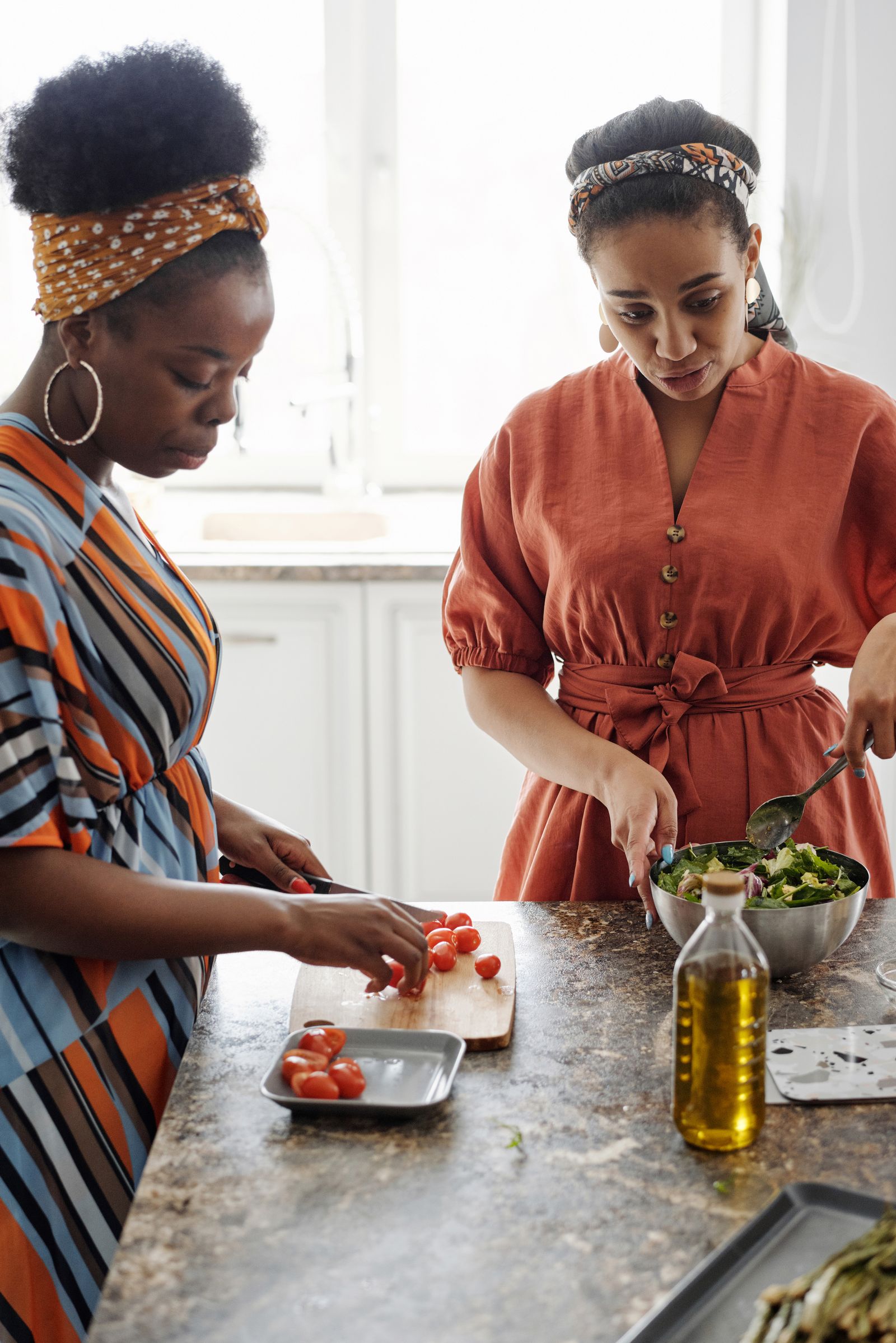
Portion confusion is the number one thing clients bring to their first session. Not cravings, not willpower — simply not knowing how much is "right." The good news: you can learn portions in an afternoon, with your own hands as the only tool.
Your Hand Is the Measuring Cup
Your palm (thickness and size) approximates a 3–4 ounce serving of protein. Your fist matches a cup of vegetables, fruit or grains. Your cupped hand holds roughly a half-cup of beans or pasta. Your thumb equals about a tablespoon of oils, butter or nut butter. Because hands scale with bodies, the system self-adjusts — a bigger person with bigger needs gets bigger portions automatically.
The Plate Geometry Trick
Draw an imaginary line down your plate: half for vegetables, a quarter for protein, a quarter for slow carbs, plus a thumb of fat. Restaurant plate overflowing? Ask for the box first and move half of it before the first bite. At home, serve from the stove and keep pots off the table — going back for seconds should require standing up.
Two Questions That End Second-Guessing
Question one: "Where is my protein?" Every meal needs a palm-sized anchor — eggs, fish, poultry, tofu, Greek yogurt, lentils. Question two: "Where are my plants?" Half the plate, every time. Answer both and the rest of the meal nearly plans itself.
When Portions Feel Hard Anyway
Evening grazing, weekend restaurants and emotional eating all distort portions. That is normal, not failure. Strategies help: pre-portion snacks into bowls, order first at restaurants so others' choices don't sway you, and keep a "good enough" standard — hitting portions 80% of the time beats perfection followed by burnout.
Practice for This Week
For the next seven dinners, build your plate with the geometry above and photograph it. No logging, no judgment — just photos. At week's end, scroll through: you will see your own patterns clearer than any app could show you. Bring those photos to a free intro call and a dietitian will read them with you.